



Exclusive Interview | Zhang Song, Senior VP of Sinsegye: Industrial Intelligent Computer Breaks the Old PLC Order, Domestic "Integrated Control and Computation" Reshapes Factories

A profound transformation is quietly taking place in the industrial world. Deep within factories built from data, code, and precision machinery, traditional control systems are facing unprecedented challenges. Intelligence, flexibility, and efficiency—once distant concepts—have now become the core engines driving the entire industry forward. In this wave, an Industrial Intelligent Computer (iComputer) based on the PC architecture is emerging as a powerful force, demonstrating robust vitality and being regarded as the next-generation mainstream choice poised to replace traditional PLCs (Programmable Logic Controllers).
Imagine when large language models like DeepSeek are introduced into factories to "dialogue" directly with machines: programming will no longer be the exclusive domain of a few engineers, and the boundaries of human-machine collaboration will be completely redefined. At the forefront of this trend, Sinsegye is an active explorer in this transformation. This high-tech enterprise, born from the Institute of Computing Technology of the Chinese Academy of Sciences, is building an autonomous and controllable “neural center” for the transformation and upgrading of Chinese manufacturing, leveraging its profound technical heritage and forward-looking strategic vision. Their core product—the iComputer—and their "software-defined" "integrated computing and control" solutions have already gotten key clients in sectors like semiconductors, photovoltaics, and new energy.
To truly understand the context of this change and the path chosen by Sinsegye, one must turn to an industry veteran—Zhang Song. The career of this Senior Vice President of Sinsegye is almost a miniature of the history of China's industrial control development. From an engineer who witnessed the germination of fieldbus technology, to a sales elite deep in the market, and now a leader deeply cultivating the iComputer track, Zhang Song has always stood at the intersection of technology and market. His story and insights provide an excellent window into the future of industrial control and that new world driven by code and algorithms.
From Frontline Engineer to Evangelist of Technology's Value
In 1997, when Zhang Song first stepped into the field of industrial automation, centralized control was still the absolute protagonist. "I graduated in 1997. At that time, automation still belonged to the earlier generation, all centralized control."
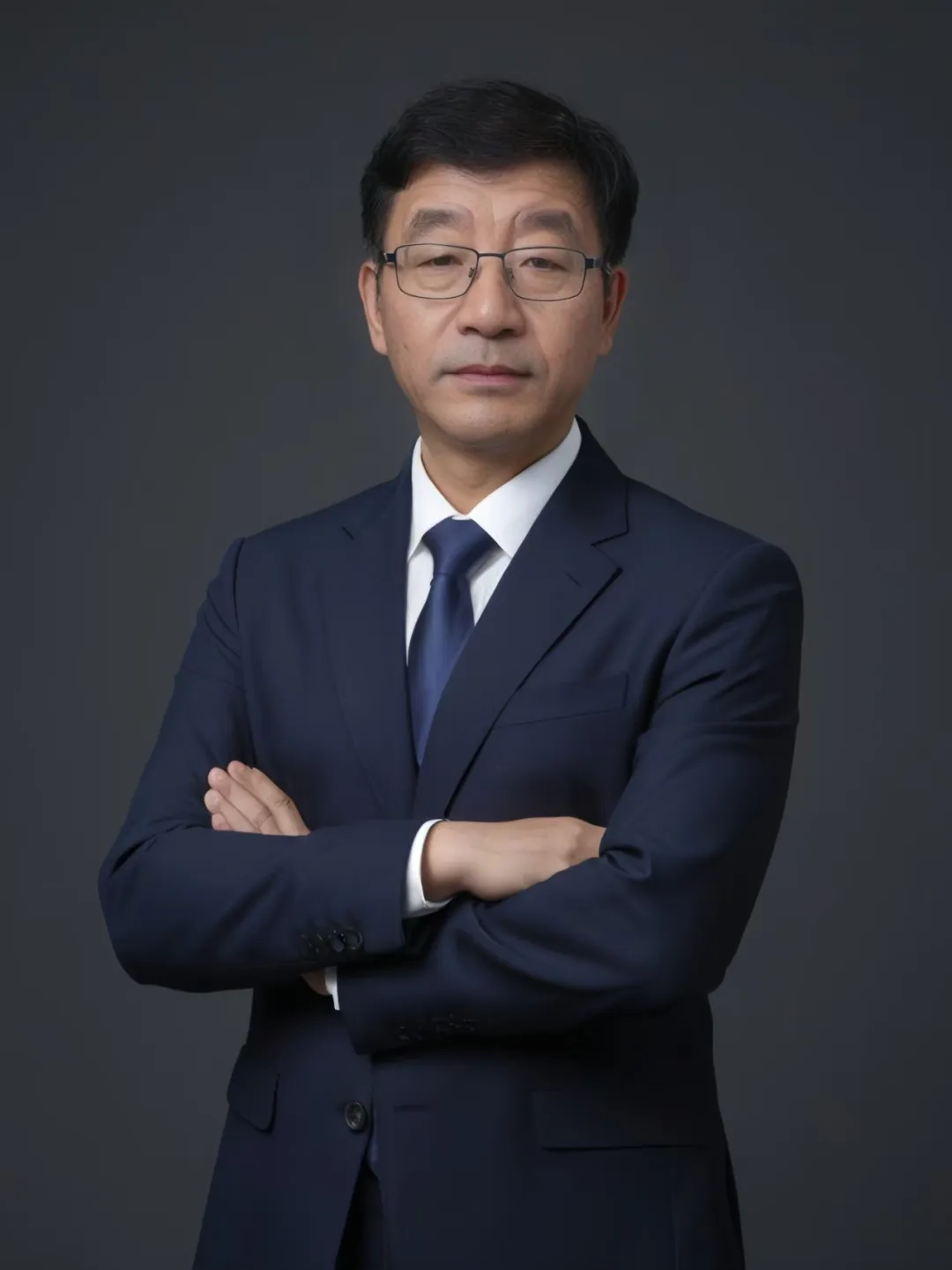
However, fate seemed to have set the stage for him early on. Working as an engineer at Shanghai Invt Electric Automation System Co., Ltd., he quickly encountered the then quite cutting-edge concept of "fieldbus." "The earliest ones at the time were like Interbus. It felt like this product was, in a sense, more advanced or avant-garde." This innate sensitivity to new technology allowed him to start his career from a higher vantage point. The real turning point came in 2000. That year, Zhang Song made a decision that many technical peers found unthinkable—to transition into sales. He joined WAGO, and three years later moved to the leading foreign industrial automation company, German-based Beckhoff, starting from scratch to promote fieldbus products and PC-based control concepts. "After all, I had a technical background, and my personality enjoys interacting with people. Moving from selling fieldbus to selling entire control systems was, I believe, a step-by-step process."
In Zhang Song's view, this was an inevitable choice conforming to industry development trends. He believes the value of technology must ultimately be tested in the market, and he was willing to be the "evangelist" bringing advanced technology to market. His over ten years at Beckhoff were a significant chapter in Zhang Song's career. Rising from Shanghai Office Manager to China Sales Director, he not only led his team to achieve historic sales breakthroughs but, more importantly, he personally witnessed and promoted the taking root of PC-based control technology in the Chinese market. This experience gave him a deep understanding that technology and market are never isolated; only by truly understanding customer pain points can technology deliver its maximum value.
In 2016, Zhang Song transitioned again, turning his attention to artificial intelligence and robotics. To outsiders, this seemed like another major crossover, but Zhang Song didn't see it that way. "I don't consider it a disconnect because both vision and machine control are forms of control. Perhaps what I focused on before was the 'eyes' , but it should actually be the 'small brain plus eyes'." He keenly observed that whether it was traditional motion control or emerging vision control, robot control, the underlying logic was interconnected and could ultimately be realized on a unified platform. This profound insight into the trend of "integrated computing and control" foreshadowed his later joining of Sinsegye to promote the "computerization of industrial automation" advocated by Dr. Ma Jun, Founder and CEO of Sinsegye.
Breaking the Old Order, Defining New Rules
"Traditional PLCs can certainly still handle conventional, low-computation tasks, but their compatibility is poor, and their CPUs don't support complex applications," Zhang Song pointed out bluntly when discussing the bottlenecks in the current industrial control market. Under the rules long set by international giants like Siemens and Rockwell Automation, the entire industry has formed a relatively closed ecosystem. However, with the emergence of new technologies like machine vision, big data, and artificial intelligence, this old order is beginning to show its limitations. Customer demands have long moved beyond simple control; they crave a more open, flexible, and intelligent platform. "This is the general trend, everyone wants all-in-one, but what customers care about most is solving problems." Zhang Song is deeply aware that promoting any new technology is not easy for industrial customers accustomed to "stability and reliability." In the Chinese market, "old technology and new technology will always coexist." Behind this unique phenomenon lies customers' concerns about risk and fear of the unknown. How to break this deadlock? Sinsegye's answer is the iComputer.
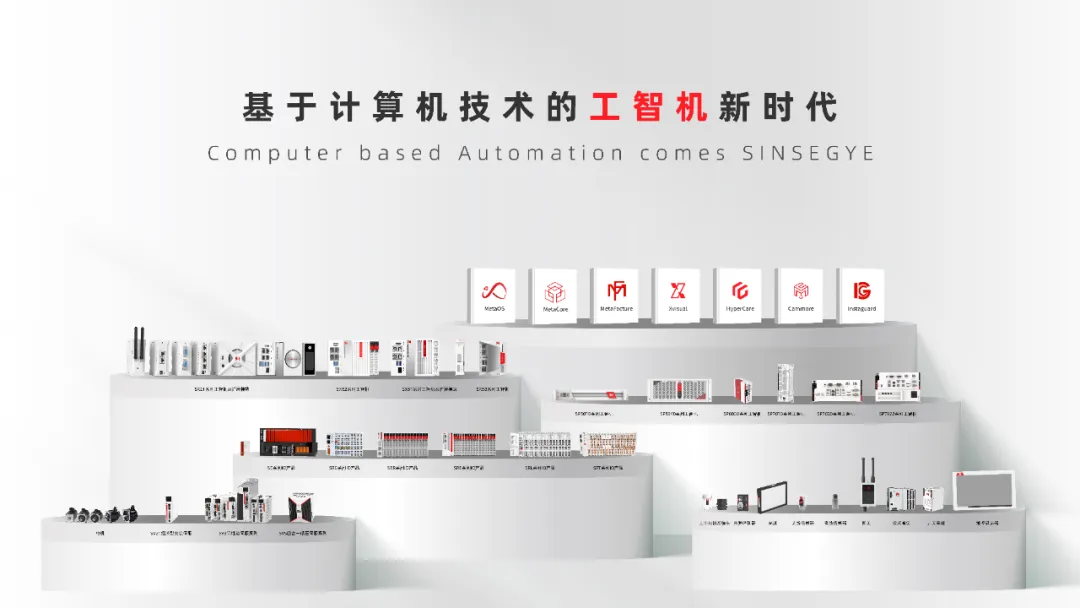
The core of the iComputer is "software-defined" (where hardware functions are primarily implemented and configured by software). Zhang Song explained: "Europe and the US are already moving in this direction; software and hardware are separate. The hardware is just a platform, and they charge for the software." This means customers no longer need to replace entire hardware sets for new functionalities; they can flexibly adjust functions through software upgrades, achieving true cost reduction and efficiency improvement, forming an ecological community around the self-developed MetaOS software platform. This model completely overturns the business logic of traditional hardware manufacturers. Building on this, Sinsegye proposed an "Integrated Control and Computation" solution, integrating functions like PLC, IPC, motion controller, and more onto a single platform. "In the future, a factory, like our reference Beckhoff who pioneered that 32-core CPU, can control the entire factory. Originally, it required hundreds or thousands of nodes; now, from a maintenance perspective, it saves a lot of time and labor costs."
The blueprint Zhang Song painted is a reshaping of the entire factory production line architecture. More importantly, as the shadow of US-China tech competition looms and "chokepoint" technologies become a Sword of Damocles hanging over Chinese manufacturing, Sinsegye's domestic localization route becomes particularly valuable. "From a national security perspective, there is a greater need for purely domestic solutions, requiring companies with backgrounds like Sinsegye." Relying on the strong background of the Institute of Computing Technology, Chinese Academy of Sciences, and its self-developed MetaOS operating system and domestic chip strategy, Sinsegye is building a solid security barrier for the lifeline of Chinese industry. Simultaneously, the iComputer not only breaks the closed nature of traditional control systems, providing fertile ground for industrial software innovation, but also offers an ideal platform for the integration of emerging technologies like machine vision and edge computing. And when Sinsegye introduces capabilities from large language models like DeepSeek into its platform to assist engineers with partial programming or interaction through natural language, improving development efficiency, a new era for industrial control is dawning.
Imagination Takes Root, Reshaping the Industrial Future
Zhang Song and Sinsegye's vision is gradually becoming a tangible reality. Today, their iComputers and "Integrated Control and Computation" solutions have taken root in multiple critical industries such as photovoltaics, semiconductors, and new energy. "Wind power generation involves major equipment, and we have successfully applied our products in such equipment," Zhang Song said proudly. In these national key equipment, Sinsegye's products not only enhance control precision and operational efficiency but, more importantly, provide an autonomous and controllable "Chinese core."
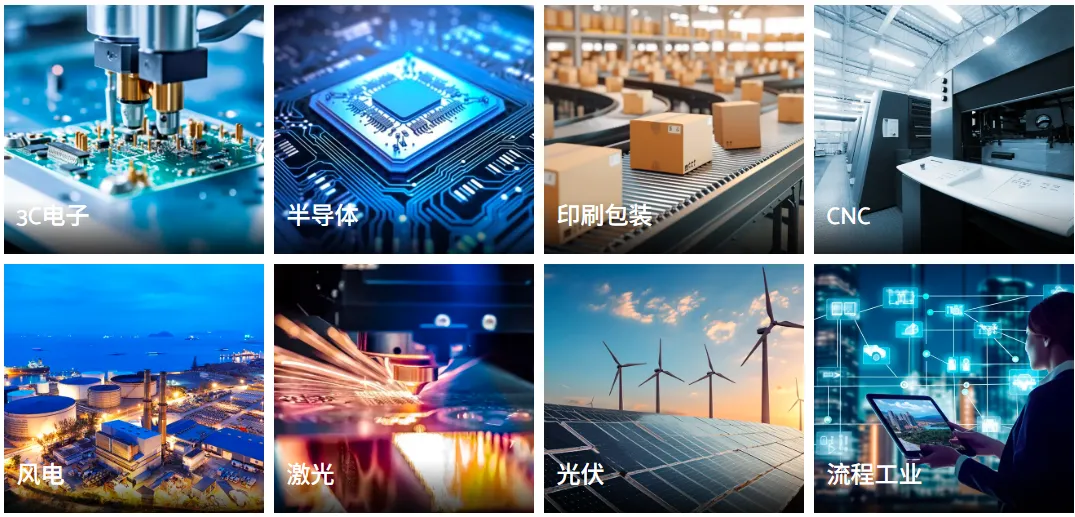
In traditional industries like steel and petrochemicals, Sinsegye has also found its place. Cooperation with giants like Ansteel proves that even in the most traditional fields, the demand for "controllability" and "intelligence" is equally urgent. In high-tech fields like semiconductors and energy storage, Sinsegye's domestic solutions have become a "lifesaver" for many enterprises. "Some aspects of energy storage already require fully domestic solutions; the key is that the control systems they use require domestic CPUs, and we already have that," Zhang Song's words revealed high confidence. This confidence stems from a clear judgment of the market space.
Estimates place the size of China's industrial control market in the hundreds of billions, and the wave of intelligent replacement has only just begun. Zhang Song believes that Sinsegye's business model is not simply about selling hardware but revolves around the core of PC control, building a complete ecosystem encompassing software, hardware, and services. "These product lines must all serve it, or be driven by it to sell other products, so it should be integrated."
For the future, Sinsegye has clear plans: continuous technological innovation, deepening industry applications, expanding into overseas markets, and building an open ecosystem. The company hopes to attract more partners through its self-developed MetaOS, MetaCore, and MetaFacture, to jointly develop future-oriented industrial applications. "The most important feedback isn't necessarily giving us data, but making the customer feel it's very flexible." Zhang Song emphasized that openness and flexibility are key to winning the future. "Based on Sinsegye's platform, I can realize some of my ideas, which is to bring deeper benefits to customers." Speaking about his personal vision, Zhang Song hopes to deeply integrate his years of accumulated industry know-how with Sinsegye's platform to create higher value for customers. This is not just a veteran's professional aspiration but also the common mission of Sinsegye and even the entire wave of Chinese industrial intelligence—using technological innovation as the spear and customer value as the shield to claim a leading position on the global industrial stage for "Intelligent Manufacturing in China."