



-
Application
-
Advanced Processing Industry
-
Other
- SCARA Vision-Guided Screw Tightening System
- Automotive Anti-Collision Beam Production Line
- Toroidal Winding Machine
- High-Voltage Wiring Harness Automated Production Line
- Transfer coating machine
- SiC Laser Stripping Machine
- Nut bending integrated machine
- Laser Rounding Machine
- Magnetic Drive Conveyor System
- GasSafe Intelligent Monitoring System Solution for Hazardous Gases
- Tobacco Packaging Production Line
- MTR Spring Testing and Storage
- Silicon steel sheet cutting machine
- Postal logistics sorting line
- Ink key equipment
- Finished cigarette packaging equipment
- Energy storage coordination controller
- Fully automatic lens thickness detection equipment
- Fully automatic dual station laser merging and coding machine
- Medium thick mirror detection equipment
- Tobacco packaging equipment
- Robotics Industry
- CNC Industry
-
Other
- Energy Industry
- Semiconductor Industry
-
Advanced Processing Industry
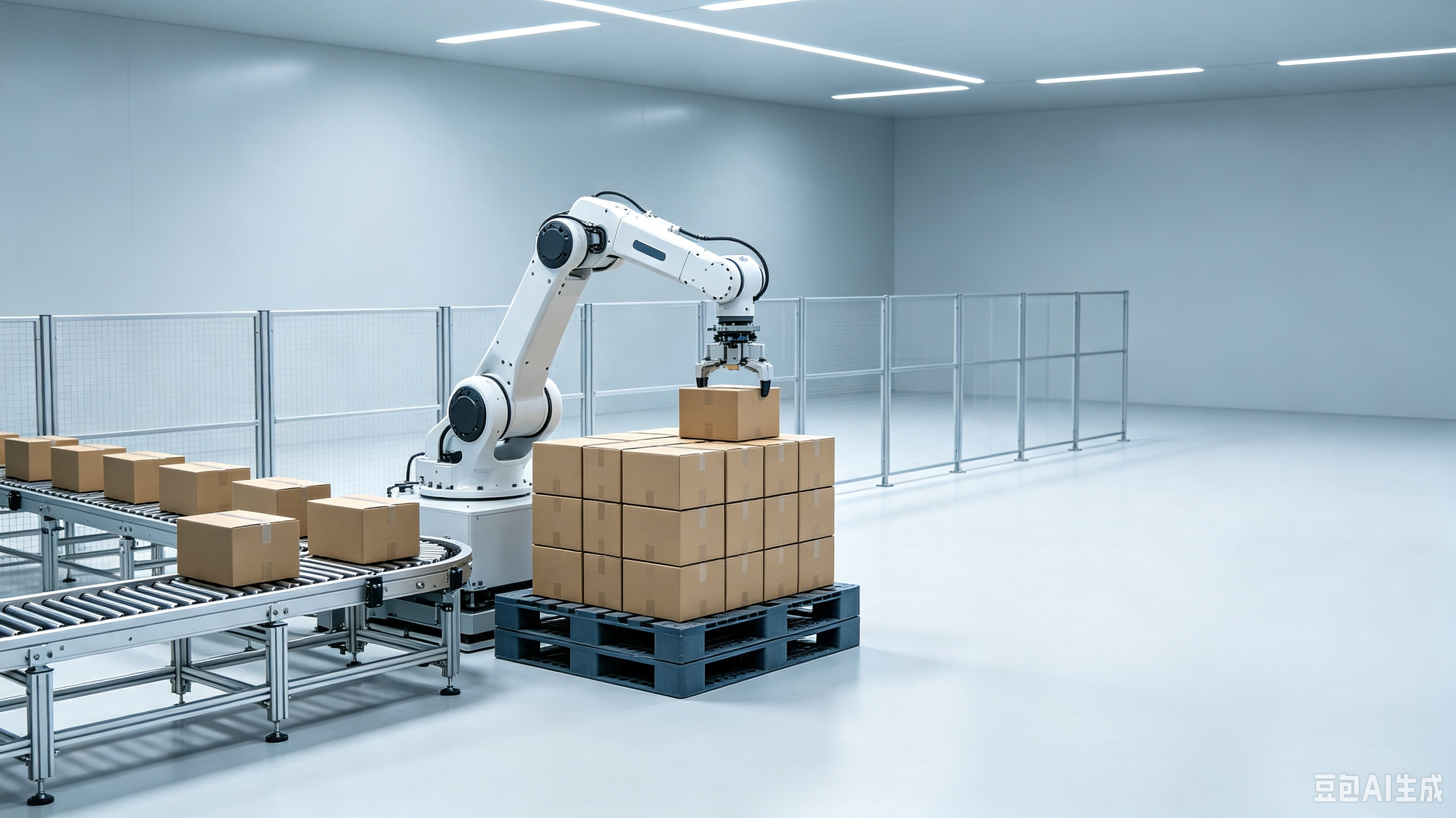
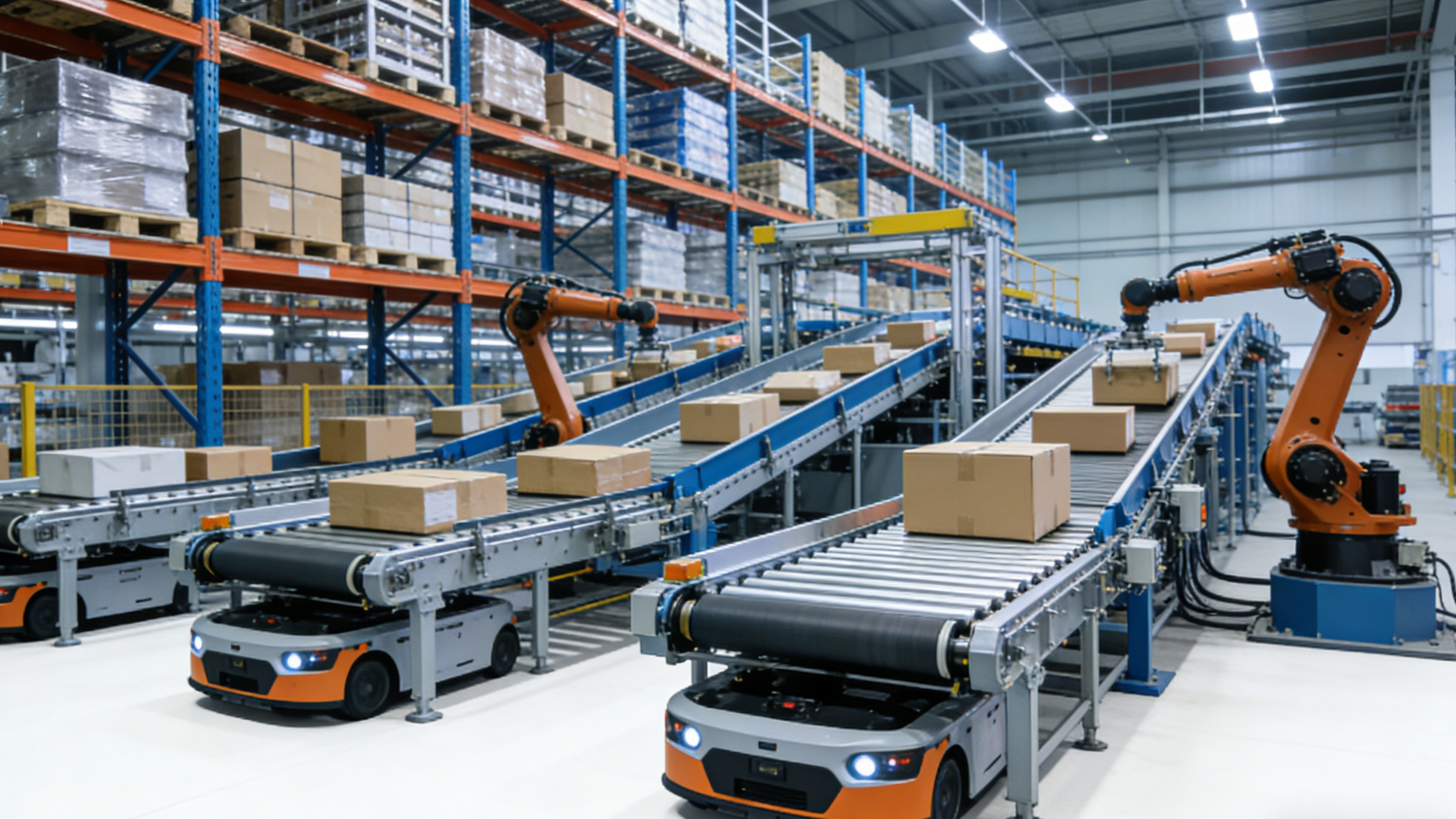
3D Vision Palletizing & Depalletizing Robot
Industry Case Background
Core Pain Points
- Fragmented System Architecture:Vision systems and robot controllers operate as separate hardware units in mainstream 3D vision depalletizing solutions. After target recognition and positioning, the vision system transmits data to the robot controller via industrial Ethernet. This architecture introduces communication latency and protocol adaptation overhead, compromising picking accuracy and response speed under high-cycle-rate working conditions.
- Insufficient Adaptability to Field Environments:Slanted, offset, or partially occluded cartons on stacked pallets, together with reflective stretch film and fluctuating lighting conditions, degrade 3D imaging quality. Many vision systems perform well under laboratory settings yet suffer noticeable drops in recognition rate and stability once deployed on production sites.
- High Solution Cost & Long Deployment Lead Time:Traditional setups require separate vision controllers, industrial PCs and PLCs, pushing up hardware expenses. System commissioning demands coordination across multiple devices, resulting in long delivery cycles for system integrators.
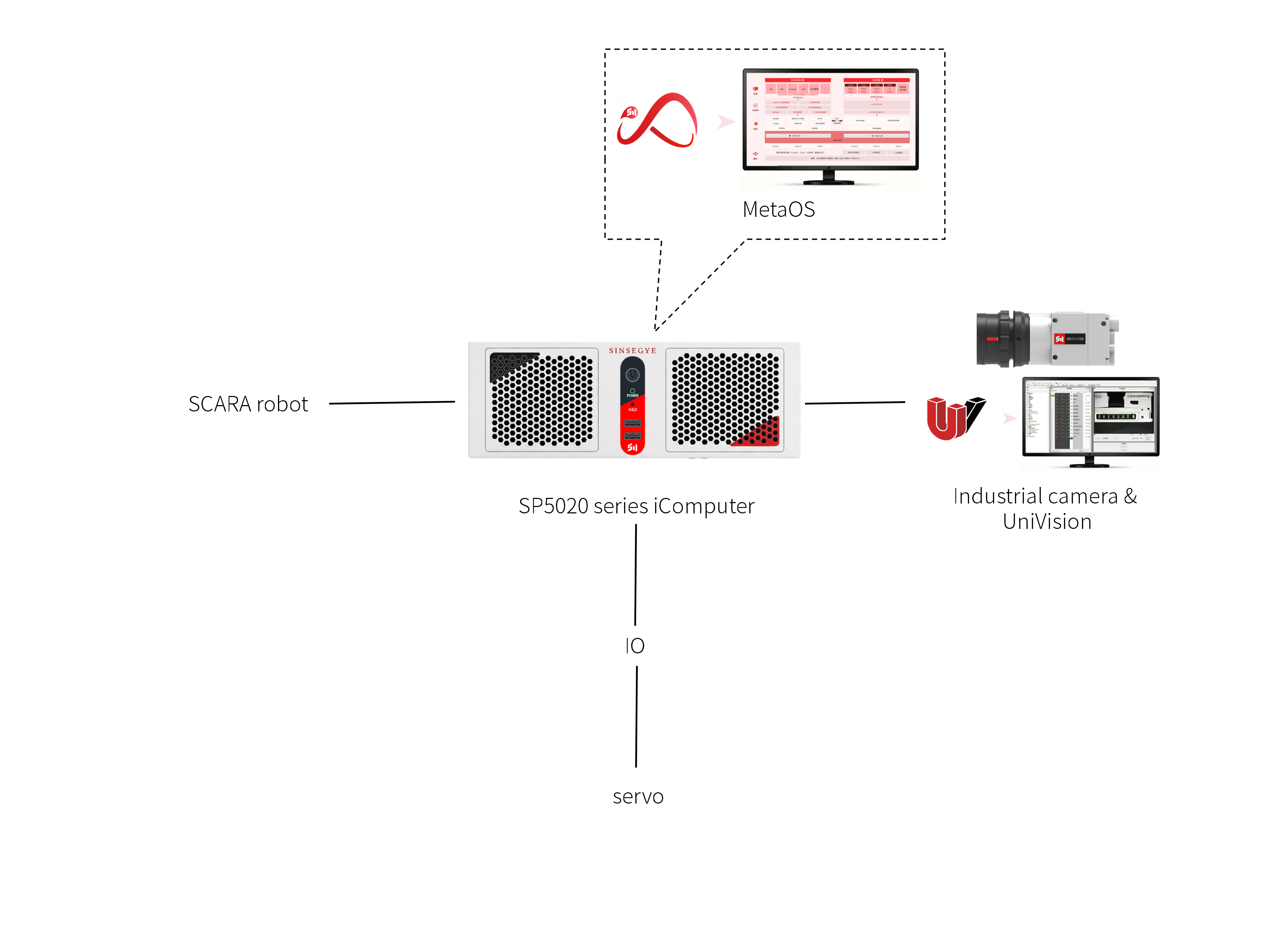
Scene Architecture Diagram
Advantages of Sinsegye's Solution
1、Integrated Computing, Control & Vision
A single Industrial Intelligent PC replaces three separate devices: PLC, vision controller and industrial PC. It cuts hardware quantity and system integration workload, shortening development cycles by approximately 60% and reducing overall hardware costs by roughly 30%.
2、Index Breakthroughs
Within one Industrial Intelligent PC from Sinsegye, vision algorithms and motion control run in isolated domains on MetaOS, eliminating network latency entirely. Once the vision module identifies workpiece pose, it directly drives full closed-loop motion planning.
3、Open & User-Friendly
The dual-domain architecture of MetaOS enables deployment of any AI frameworks including PyTorch, TensorFlow and OpenCV in the Windows domain. Customers with self-developed or third-party vision algorithms can deploy programs directly on the Industrial Intelligent PC, without purchasing extra dedicated vision IPCs.